
Australian Business Economists luncheon | Sydney
Anna Hughes, CEO
Introduction
I would like to begin by acknowledging the Traditional custodians of the land on which we are meeting, the Gadigal people of the Eora Nation, and pay my respects to their Elders past and present. I extend that respect to Aboriginal and Torres Strait Islander people here today.
Today, I hope to continue in the tradition of our First Nations people whose culture is deeply grounded in connections and storytelling. I see my annual ABE speech as an opportunity to connect with market participants and provide an update on our upcoming funding task and our strategies for navigating ongoing uncertainty. I will also share an update on the Treasury Indexed Bonds project and how the AOFM is responding to the recommendations of the Independent Review.
As you have come to expect, I will be as transparent as possible, and my aim today is to answer your questions as frankly as I can. That said, I am mindful that I do not offer any information that can be misconstrued as upcoming action. Given the ongoing geopolitical and economic uncertainty, the AOFM will need to continue to respond to market conditions as they evolve.
Funding task and issuance program
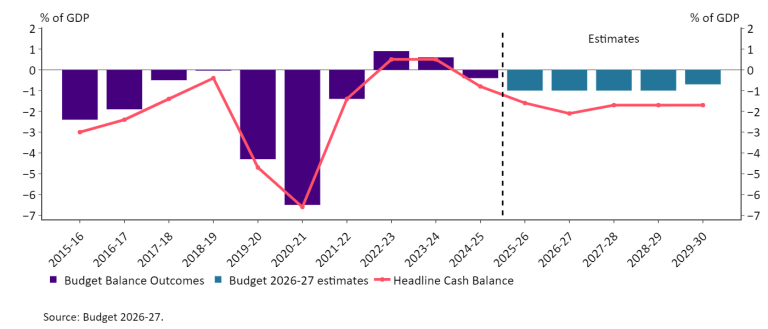
Let me start with this year’s funding task. As you can see from this chart, an underlying cash deficit of $28.3 billion is forecast for last fiscal year. This does represent a modest improvement since MYEFO. A deficit of $31.5 billion is forecast for this fiscal year while the headline cash balance represented by the red line more closely reflects the AOFMs funding task. It includes investments such as loans to students and investments in climate change mitigation programs through the Clean Energy Finance Corporation.
Chart 1: Australia's budget balance
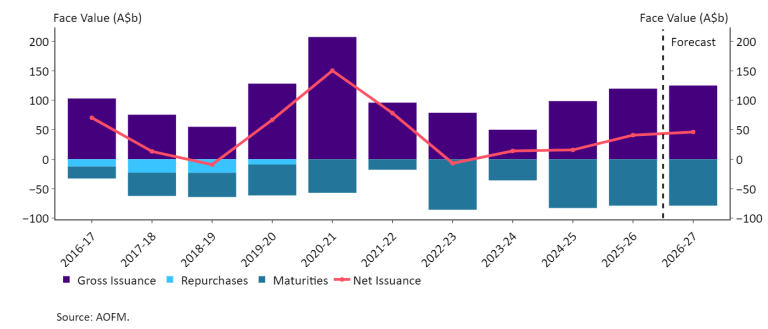
Post the May Budget we indicated to the market that for 2026-27 we expect to issue around $125 billion in Treasury Bonds. This includes refinancing of around $79 billion in maturing bonds with net issuance around $46 billion. This funding task is similar to last fiscal year, so we believe the AOFM is well-placed to deliver. That said, with four syndications including the launch of a new TIBs product, fiscal year 2027 is shaping up to be a big one for the AOFM.
Chart 2: Composition of Treasury Bond Issuance
As an organisation that values continuous improvement and transparency, we have taken steps to provide more detail in this year’s issuance update. On June 26 we provided guidance for the full 2026-2027 fiscal year rather than just the first six months. The primary purpose of this additional information was to provide clarity around timing of the planned transactions. We have given ourselves a nine-month window of after 30 September 2026 and prior to 30 June 2027 to issue a new 30-year Treasury Bond maturing in 2057. The AOFM is not providing guidance on the size of the new 30-year transaction, however, given the composition and size of our funding program this year, it is unlikely to be any bigger than the 2054 bond and could potentially be a little smaller. The timing and size of the issuance will be, as you would expect, dependent on market conditions and how we, as a sovereign issuer, balance cost, and risk. That said, we remain committed to maintaining a 30-year curve and recognise the importance of ultra-long bonds to the overall health of Australia’s debt markets.
We also plan to issue two new 2038 Treasury Bonds. The May 2038 bond will be issued by the end of September, and the December 2038 bond will be issued in the second half of 2026-2027, subject to market conditions. The remainder of our issuance will be done via tender with issuance decisions made on a weekly basis. As is our normal practice, we will look to provide stable and scalable low-cost funding to the government while aiming to satisfy demand from investors. The issuance weighted average maturity for this fiscal year will likely be consistent with recent years for Treasury Bonds at around 10 years while our portfolio weighted average maturity will remain around current levels.
The longer outlook for our 2026-2027 issuance notice, also allowed us to provide additional information regarding the indicative timing of a new linker transaction referencing monthly CPI, which will be issued via syndication in the second half of 2026-2027. This will be in addition to the usual $2 to $3 billion issued via tender.
Before I move on to the linker program, I would note that the AOFM will still provide an issuance update later in the year and post MYEFO. Additionally, in line with one of the recommendations in the independent review, the AOFM will also look to be more flexible in changing issuance volumes in response to changes in the fiscal picture. I will speak more about this later in today’s speech.
Treasury Indexed Bonds
The arrival of a Treasury Inflation Linked Bond referencing monthly CPI has been several years in the making. Before I speak about our plans for the fiscal 2027 issuance, I thought I would provide a quick recap on how TIBs fit into the AOFMs broader issuance strategy.
Unlike the UK for example, Australia has a smaller natural investor base for Treasury Indexed Bonds, reflecting the fact that our retirement system is predominantly defined contribution rather than defined benefit. In addition, current legislative settings mean that inflation-linked bonds remain off-benchmark for defined contribution superannuation funds. While there are investors in other sectors with a need to hedge inflation risk, including insurers, the overall investor base remains concentrated.
While the AOFM does not rely on or need TIBs for budget funding, we believe, and the recent independent review agreed, that well-developed financial markets should have a market-based measure of inflation expectations. As I noted last year, as part of our ongoing commitment to TIBs we are looking to remove as many barriers as possible to investor participation where we can, and one of the challenges to attracting greater offshore interest lies in the structural differences between Australian TIBs and those issued in other developed markets. Specifically, most offshore sovereign linkers reference a monthly CPI and pay semi-annual coupons. Soon, our next generation of TIBs will do the same.
The draft Information Memorandum that will explain the details of the new instrument has been reviewed by AFMAs inflation products committee and it is currently being checked by the lawyers. The AOFM expects to release the IM in the coming months with a roundtable to answer questions and to hear views around the integration of the new linker class into the inflation market to follow before the end of the 2026 calendar year.
All things going to plan we will issue our first monthly CPI referencing TIB via syndication in the second half of this fiscal year. The bond will likely have a tenor of around 11 years. We remain confident that both the existing TIBs, which reference quarterly CPI, and the new TIBs can coexist in the market. That said, we recognise that some market participants will be keen to migrate to the new lines over time while others will be keen to hold their bonds to maturity.
While these are the types of issues we will discuss at the upcoming roundtable, I can share a few baseline principles that will shape our approach.
Firstly, our objective is not to replace existing linkers referencing quarterly CPI. We continue to view them as an important and investable part of the inflation-linked market, not as legacy or redundant securities that require replacement. This means we will continue to support their liquidity, including through further issuance when there is demand. At the same time, all new inflation-linked bond lines will reference monthly CPI. With several large maturities ahead of us, the proportion of monthly CPI-linked bonds in the market will increase naturally, but we expect both formats to co-exist for many years.
Secondly, simplicity in execution and communication will be a priority for the AOFM. Lastly, I must, again, emphasise our need to balance the overall cost to the Australian taxpayer with investor preferences.
Playing the long game
I’d like to turn now to the independent review led by Dr Guy Debelle.
The review was commissioned by the Treasury Secretary at my request in February this year. The review looked at the AOFM’s operations, capability, and how effective the organisation is in delivering on its mandate. At the time, I felt it was important that financial markets be provided external assurance that the AOFM was able to deliver its core responsibilities: meeting the government’s annual financing task while considering costs and risks; ensuring the government can always meet its cash outlay requirements; and, conducting market facing activities that support a well-functioning AGS market.
Dr Debelle interviewed bank intermediaries, investors, Treasury and AOFM officials, both former and current. Thank you to everyone in this room who was involved.
The review confirmed that the AOFM is performing its core functions effectively, and that Australia’s sovereign debt management program is highly regarded by market participants, meets the Commonwealth’s financing needs and is administered in a cost-effective way.
It would have been unreasonable to expect that the review would not find some areas of improvement. In the end, the review had six recommendations. The Treasury and AOFM agreed to the recommendations and the Treasury released its response to the review on 9 July 2026. As an agency that prides itself on continuous improvement, we will use the identified opportunities to improve our operations and will work with the Treasury to implement them. I won’t labour on our response to each recommendation. Instead, I will focus on the liquidity buffer, the importance of our strategic workforce plan, and Treasury’s plans for the Advisory Board.
Liquidity buffer
Before we get onto how we plan to manage liquidity in the future, it is important to provide some background and context.
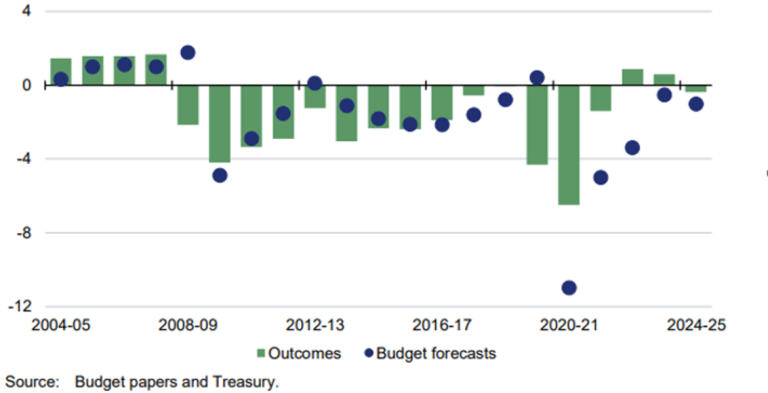
Chart 3: Liquidity Buffer - some context
Comparison of forecasts and outcomes for underlying cash balance per cent of GDP
The AOFM’s liquidity management function has three sources of risk: funding risk, forecasting risk and refinancing risk. While this audience already understands funding and refinancing risk, I think further explanation of what forecasting risk looks like for a sovereign and how it emerges is worth exploring.
From our viewpoint, forecasting risk reflects two main issues: firstly, the mismatch between the timing of specific payments or receipts, which can lead to large forecast errors in the short term but in general will reverse out; and secondly, the divergence between Budget estimates and actual outcomes which can lead to large underlying errors developing over annual time periods. As you can see from this chart, budget outcomes have consistently outperformed forecasts since fiscal year 2021.
In the preparation of the annual Liquidity Management Strategy, the AOFM calibrates its funding program to Government financing requirements as set out in the Budget (and updated at MYEFO) at that point in time. The AOFM does not pursue a strategy of deliberately grossing up term issuance for the purpose of funding short term cash holdings. Over time, cash holdings can be boosted by budget outperformance. The AOFM can then recalibrate our term issuance program in response and while there is some lag, over time, it does catch up.
As you all appreciate, the AOFM prides itself on being a stable and predictable issuer, so when we announce the issuance program, we maintain a broadly consistent weekly issuance run rate until we have another opportunity to update the market. Currently, that is twice a year: post the official budget in May and post MYEFO six or so months later. Consistent with the findings of the independent review we will work with Treasury on finding additional opportunities to update markets more frequently on our issuance program.
Another cash management option the AOFM has considered is investing in assets that earn a higher rate of return than our cash management account. While this could increase returns, it would also introduce credit, liquidity, market and reputational risks. As Cash Management Account balances are required to provide capacity in periods of market stress, these risks are considered inconsistent with a sovereign’s risk appetite. The independent review reached the same conclusion.
The review also recommended that our $30 billion liquidity buffer be lower. As noted in the Treasury’s response to the review, the liquidity buffer is a key component of the AOFM’s annual Liquidity Management Strategy, and the appropriate level of the buffer is regularly considered by the AOFM Advisory Board and approved by the Treasury Secretary. The liquidity buffer was considered while formulating this year’s strategy. The core settings of the Liquidity Management Strategy will continue to be maintained.
From this year, we will introduce a two-tier liquidity buffer. There will be a soft buffer of $15 billion to $30 billion and a hard buffer of $15 billion. The first tier can be used for up to 10 consecutive business days while the second tier will have stronger reporting requirements and an issuance response.
Chart 4: Liquidity buffer - a two-tiered approach
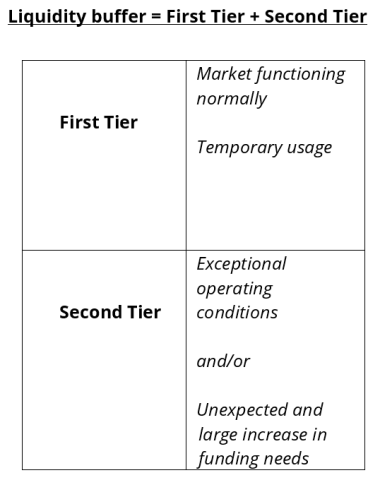
Tiering will enable the AOFM to look through temporary declines in cash balances which often occur between large payments early in the month and large receipts approximately ten days later. When cash balances fall into this first tier, the AOFM will now have the option of allowing it to recover via net-government inflows rather than additional issuance.
The other part of the liquidity story is our use of Treasury Notes. The AOFM has progressively expanded the Treasury Note program in recent years. Average Treasury Notes outstanding rose from approximately $30 billion in 2024-25 to approximately $39 billion across 2025-26 and is planned to be higher again in 2026-27. The increased usage of Treasury Notes aligns with the findings in the independent review and will be used to reduce the costs of liquidity management and to dampen the amplitude of the cash cycle through the year. I’d note here that actual Treasury Notes issuance is subject to change depending on the cash position and Budget outcomes. Cyclical factors also have an influence, meaning that the rate of issuance can vary considerably over the course of the year. As a guide, I would not expect issuance to fall below $2 billion or to exceed $6 billion in any given week
Before I finish with an update on our workforce, I’d like to flag the changes that have been made to the AOFM Advisory Board. In response to the independent review, Treasury has expanded the remit of the AOFM Advisory Board such that there will now be both greater oversight and support from what is a highly experienced and highly credentialed panel of experts. This is a welcome development.
Strategic workforce plan
I’d like to finish on how the AOFM is preparing for the future. As I flagged earlier in my speech, no organisation is perfect and it is impractical for us or anyone to scenario test for every possible crisis. Having strong foundational tools to respond to any eventuality is key and we are continuing to work with Treasury and the RBA on our collective preparedness including performing ‘fire drills’.
Further, we recognise that having the right culture is central to the AOFM’s ability to respond during periods of crisis and that the ultimate form of preparation is not planning for a specific scenario, but a resilient and scalable platform underpinned by a mindset that can handle uncertainty.
It is important that our organisation of around 45 people has a focus on ensuring that it has a deep talent pool. The AOFM’s funding team brings together more than 70 years of sovereign debt issuance experience, but it is important that we build and retain talent at the junior levels so that as our longer tenured employees move into retirement there is a depth of expertise behind them. While it’s important to have employees who understand the AOFMs context, we also value the diversity that comes from external experience.
To ensure that this happens in a deliberate and methodical way, the AOFM is developing a Strategic Workforce Plan. The plan will set out how AOFM will continue to strengthen its workforce capability, talent, succession depth, retention and management of critical roles over the next three years. It is through this process that we will address the first recommendation of the independent review.
Summary
In summary, the AOFM is well-placed, thanks to our strong fundamentals, to deliver both this year’s financing task as well as responding with agility to any future crisis that Australia might face. These fundamentals include a scalable and resilient platform, our deep and diverse investor base and the strong relationships we have with market participants including many of you in this room.
The performance of our employees is being supported with an organisational structure designed around functional alignment and an understanding of the capacity and capabilities required to perform and deliver on the AOFM’s core purposes. Over the past two years, we have deliberately invested in building a more resilient and future-ready organisation, ensuring our ability to deliver on our core purposes remains strong and sustainable.
The independent review noted our successes and validated that the AOFM is delivering its core functions effectively. The review provided us with further opportunities to improve. As with everything that we do, the AOFM will embrace these to ensure that we continue to deliver for Australia’s financial markets.
Thank you for your time this afternoon.
